









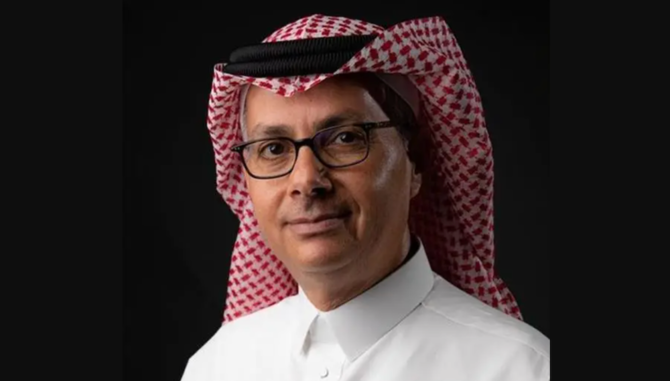
When the Nobel Prize in Chemistry 2025 was announced, it became a moment of pride for both science and Saudi Arabia. Professor Omar Yaghi, a Saudi scientist whose research has transformed how matter is understood, became the first Saudi Nobel Prize winner in 2025, carrying a legacy of both pride and promise.
He shared the award with Susumu Kitagawa of Kyoto University and Richard Robson of the University of Melbourne for their pioneering work on metal-organic frameworks (MOFs), porous materials that capture gases, filter water, and harvest moisture from the air.
The recognition marks a defining moment in Saudi Arabia’s ongoing vision to establish a strong, world-class foundation for scientific research and innovation under Vision 2030.
A Journey That Redefined Possibility
Born in Amman, Jordan in 1965, Omar Yaghi’s story began far from the polished halls of academia. His early life was shaped by scarcity. Water was rationed, space was tight, and education was often out of reach. Yet those same hardships became the foundation of his scientific curiosity.
By age 15, he had moved to the United States, where his journey unfolded step by step: from Hudson Valley Community College to a bachelor’s degree at University at Albany, and then a Ph.D. in inorganic chemistry at the University of Illinois at Urbana-Champaign.
His postdoctoral work at Harvard University sharpened his focus on how atoms could be linked in new, stable ways, a pursuit that would later give rise to reticular chemistry, a field he himself named.
Building a New Kind of Material
At the core of Yaghi’s achievement lies reticular chemistry, the science of linking molecules together with strong bonds to form intricate, porous structures. These frameworks, known as MOFs (metal-organic frameworks) and COFs (covalent organic frameworks), behave like molecular sponges.
Just one gram of a MOF can have the internal surface area of a football field. This allows it to capture carbon, store hydrogen, or harvest clean water from thin air.
In the words of the Nobel Committee, the trio’s discoveries “revolutionized materials science,” opening possibilities in clean energy, environmental protection, and climate adaptation.
From Scientific Discovery to Real-World Impact
At the University of California, Berkeley, where he serves as the James and Neeltje Tretter Chair Professor of Chemistry. Yaghi has turned laboratory breakthroughs into practical technologies.
His MOF-based water harvesters can produce fresh drinking water from air, even in places with less than 10% humidity. The devices, powered by sunlight, have already been tested successfully in Death Valley, one of the driest regions on Earth.
Yaghi’s startup Atoco is now scaling these systems to produce up to 20,000 liters of water a day. Offering potential relief for arid regions, including large parts of Saudi Arabia.
It’s fitting, then, that the Saudi Nobel Prize winner 2025 first began asking scientific questions about water. A resource that once shaped his own childhood struggles.
Deep Ties to Saudi Arabia
Omar Yaghi was granted Saudi citizenship in 2021, part of the Kingdom’s push to attract top global researchers under Vision 2030. He now serves as Co-Director of the KACST–UC Berkeley Center of Excellence for Nanomaterials for Clean Energy Applications, and advises the President of the King Abdulaziz City for Science and Technology (KACST).
In his Nobel remarks, Yaghi thanked Crown Prince Mohammed bin Salman for his support, calling it “pivotal in transforming Saudi Arabia into a center of scientific innovation.”
His work represents a model of what Saudi research can achieve when international collaboration, funding, and purpose come together.
A Life of Recognition and Global Influence
Before receiving the Nobel Prize in Chemistry 2025, Yaghi had already earned nearly every major international science honor:
- King Faisal International Prize in Science (2015)
- Wolf Prize in Chemistry (2018)
- Tang Prize in Sustainable Development (2024)
- Balzan Prize for Nanoporous Materials (2024)
With over 300 publications, 250,000 citations, and an h-index of 194, he ranks among the most cited chemists in the world. His influence extends across materials science, renewable energy, and environmental chemistry. Fields that are now at the heart of Saudi Arabia’s sustainability goals.
Future Plans: The Air Economy
Yaghi often speaks about what he calls the “air economy,”. He refers to a future where clean water, carbon capture, and renewable fuels can all be generated directly from the atmosphere. It’s a vision that merges chemistry with humanitarian purpose: transforming air into a resource for life.
For Saudi Arabia, this concept resonates deeply. It offers a blueprint for solving water scarcity, reducing emissions, and supporting the country’s giga-projects, from NEOM to the Red Sea Project, with technologies born from chemistry and compassion.
A Defining Moment for Saudi Science
The story of the Saudi Nobel Prize winner 2025 is larger than a single achievement. Omar Yaghi’s recognition brings together years of dedication, a nation’s investment in science, and the persistence of a researcher who never lost curiosity.
His Nobel Prize in Chemistry reflects the steady rise of Saudi Arabia’s scientific journey. The Kingdom has invested in research centers, built global partnerships, and supported discoveries. They now influence the future of energy, water, and sustainability.
In Yaghi’s own path, there is both inspiration and direction: that curiosity, when supported and nurtured, can lead from modest beginnings to world-changing discoveries. For Saudi Arabia, his success marks the beginning of a new era of scientific confidence. One where the Kingdom’s pursuit of knowledge continues to grow, innovate, and lead.
FAQs
Who is Omar Yaghi?
Omar M. Yaghi is a Saudi scientist and professor at the University of California, Berkeley. He is known for pioneering reticular chemistry and metal-organic frameworks (MOFs). He is the Saudi Nobel Prize winner 2025 in Chemistry.
Why did Omar Yaghi win the Nobel Prize in Chemistry 2025?
He was awarded the Nobel for developing metal-organic frameworks (MOFs) and covalent organic frameworks (COFs). They are materials with vast potential in clean energy, water harvesting, and carbon capture.
What is reticular chemistry?
It’s the science of linking molecular building blocks into extended structures with strong bonds. And, creating materials with immense internal surface areas for capturing gases or storing energy.
What is Yaghi’s connection to Saudi Arabia?
Granted Saudi citizenship in 2021, Yaghi co-leads the KACST–UC Berkeley Center of Excellence for Nanomaterials. He advises national research bodies aligned with Vision 2030.
How do Yaghi’s discoveries help the environment?
His MOF-based systems can harvest water from air, capture CO₂, and store hydrogen. Ultimately offering sustainable solutions for energy and water challenges across the world.
Follow us on Instagram for daily travel inspiration and untold stories from the Kingdom. Want more? Explore more experiences and stories in our Business and Innovation category.
This article is brought to you by Soul of Saudi (a Saudi travel blog dedicated to uncovering the beauty, heart, and soul of the Kingdom).