








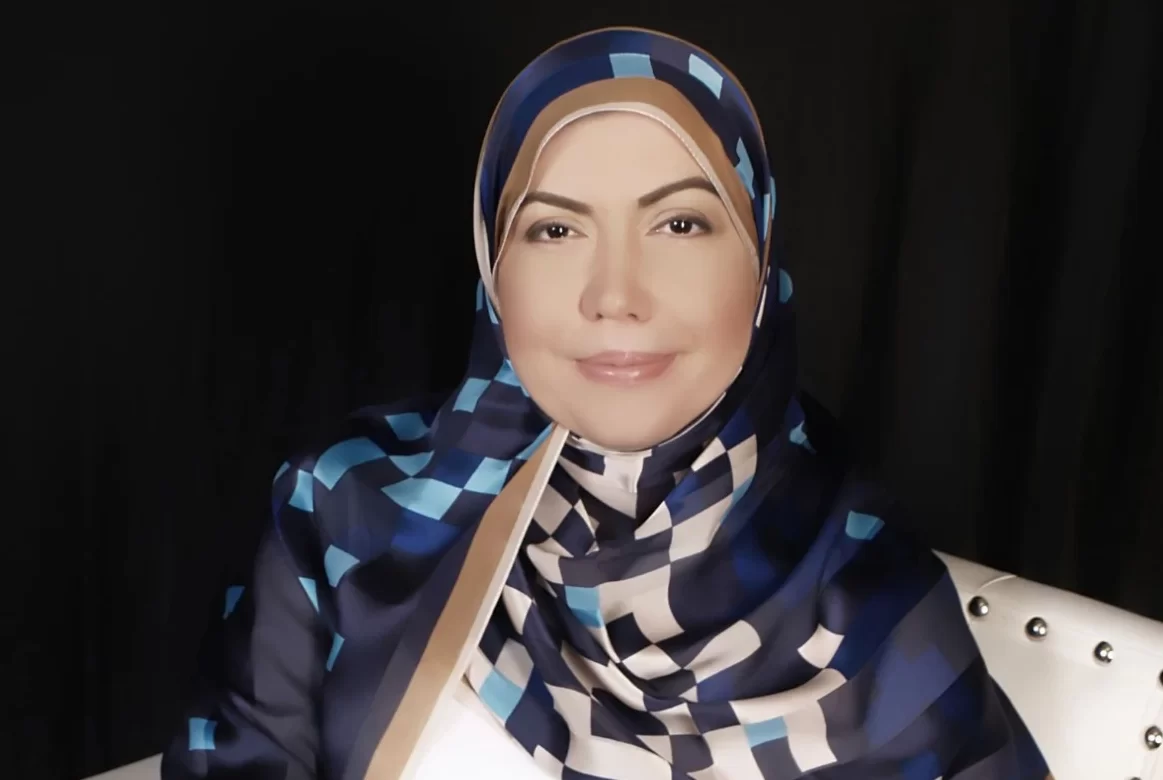
In a digital ecosystem shaped by visionaries and built on belief, few stories capture the pulse of transformation and business acceleration like that of Tuba Özlem Terekli. A Saudi Misk 2030 Leader, global strategist, and purpose-driven executive, Tuba has spent over two decades interweaving innovation, faith, and foresight into the fabric of Saudi Arabia’s entrepreneurial renaissance.
As the co-founder and CEO of Qotuf Al Riyadah and the pioneering force behind Flat6Labs Jeddah, the Kingdom’s first technology accelerator, she has helped transform ambition into opportunity for over 70,000 entrepreneurs. Her leadership journey, spanning advisory roles to government entities and global collaborations across 57 countries, reflects a woman deeply aligned with Saudi Arabia’s Vision 2030 narrative: one that empowers, connects, and uplifts.
What defines Tuba is not just her professional triumphs, but her philosophy of building with purpose. Her approach to leadership amalgamates intuition with intellect, guided by a belief that growth is not achieved through disruption alone, but through compassion, strategy, and collective progress.
Leadership is not what you build; it’s who you build it for.
Explore her conversation with ‘Soul of Saudi’ on faith, resilience, and the rebirth of opportunity in the Kingdom.
1. You’ve influenced entrepreneurship across Saudi Arabia with initiatives and partnerships that span across 57+ countries and impacted over 70,000 entrepreneurs. Which experience beyond Saudi Arabia changed how you lead and think about business?
When I began collaborating with entrepreneurship networks across more than fifty countries, I realized that innovation looks different everywhere, but its heartbeat is the same. Whether in Indonesia, South Korea, or Silicon Valley, what drives entrepreneurs is not resources, but resilience.
One moment that stayed with me was in East Africa, where founders were solving health and education challenges with almost no infrastructure. They weren’t building startups for valuation; they were building them for survival and dignity. That grounded me. It reminded me that entrepreneurship is not about disruption for fame but rather, it’s about relevance and purpose.
Through collaborative programs that reached tens of thousands of entrepreneurs, I learned to see leadership as service. The best leaders are translators; they translate global frameworks into local value. That experience shaped how I tried to develop initiatives in Saudi Arabia: with empathy, clarity, and a deep respect for the power of collective progress.
2. As co-founder of Qotuf Al Riyadah and leader of Flat6Labs Jeddah, you’ve built the foundations of Saudi entrepreneurship from the ground up. What did it take to believe in something before the world did?
When we founded Qotuf, there was no clear path, only conviction. Entrepreneurship wasn’t a mainstream concept in Saudi Arabia yet; it was an aspiration in search of structure. But I believed deeply that Saudi talent was not lacking but that it was waiting.
We took bold steps, and I had an amazing partner, Dr. Ghassan A. Alsulaiman, who truly embraced the programs along with our partners and sponsors. Building the first private-sector-led- led foundation for entrepreneurship, establishing Flat6Labs Jeddah, and launching Saudi Arabia’s first technology seed fund were historic. Every milestone required explaining the “why” before people could see the “how.” It was exhausting at times, but that’s what pioneering feels like, almost as if we were building bridges where there were none.
Believing before the world did required patience, collaboration, and faith. I surrounded myself with people who shared the same purpose: to create opportunities, not headlines. When the first startups from our programs were successful in fundraising, it wasn’t just a business success; it was proof that the Saudi entrepreneurial dream had a pulse.
3. Saudi Arabia’s transformation under Vision 2030 is unfolding across sectors. Which industry feels most exciting to you right now, and why?
I find the intersection of healthcare and technology absolutely fascinating. It’s not just about medicine or devices anymore; in my opinion, it’s more about building a new ecosystem of wellness. Having worked on major healthcare projects, I’ve witnessed firsthand how digitalization, AI, and preventive care are transforming the patient experience into a lifelong health journey.
What excites me most is how Saudi Arabia is approaching healthcare not as a system, but as a culture. We are redefining well-being through innovation, and more importantly, through inclusion. When technology enables better access, rural or urban, it becomes a social equalizer.
For me, healthcare embodies the spirit of Vision 2030: purpose-driven progress that improves lives. We are designing not just hospitals, but healthier futures, especially with the quality of life program initiatives, and that’s the kind of innovation that truly moves a nation forward.
4. Having gotten trained in Silicon Valley, what lessons from that innovation ecosystem have stayed with you and shaped how you build ventures in Saudi Arabia?
My time in Silicon Valley taught me one profound lesson: failure is feedback, not finality. The culture there doesn’t fear mistakes; it learns from them, quickly and constructively. That mindset changed how I view entrepreneurship. In Saudi Arabia, we’ve traditionally valued perfection, but innovation demands iteration
Another powerful lesson was how collaboration fuels creativity. In Silicon Valley, even competitors exchange ideas because they understand that innovation thrives in open ecosystems. I’ve brought that philosophy home to encourage startups, corporates, and government entities to collaborate instead of operating in silos
Ultimately, the biggest takeaway was mindset. You can import models, but not mentality. Saudi Arabia’s innovation story must be written in our own voice, with our own faith, culture, and values, where ambition is matched by authenticity, and growth is guided by gratitude.
5. You’ve advised public and private sector leaders alike. How do you align shared purpose and create synergy between vision-driven institutions and business realities?
Bridging purpose and practicality has been a core part of my career. Whether advising ministries or family conglomerates, I’ve learned that transformation begins when you speak both “languages”, the language of aspiration and the language of execution.
Having worked with the nation’s largest family businesses, I know that leaders often dream big, but execution falters when those dreams aren’t translated into measurable impact. My role has always been to align both worlds, where I focused on turning purpose into policy and vision into viable business models. It’s about designing systems where institutions and investors move in harmony rather than opposition.
And one word I can’t stand is “Quick-wins” in project requirements, the word reminds me of physicians who prescribe pain killers to patients without discovering the root cause of the pain. Transformation takes time as well as patient capital, and execution takes wit, savvy, experience, and know-how put in the mold of a leader who is willing and has integrity.
Overall, true synergy happens when everyone sees themselves in the outcome. In Saudi Arabia, this alignment is what’s fueling Vision 2030 as public ambition meets private innovation, and together they create national momentum. My greatest satisfaction comes from helping leaders find that rhythm, and I am already excited about Vision 2050 and what it would entail.
6. As the Kingdom’s first female CEO of Avon Beauty Arabia, how has your journey shaped your perspective on female leadership, and what does empowerment mean to you today?
I had already served as a co-founder and CEO previously, but becoming the first female CEO of a multinational beauty company that was going through a massive transformation globally was both an honor and a responsibility. I wasn’t just managing a company; rather, I was managing the expectations of direct sales teams across 13 regions, each with its own challenges.
Empowerment, to me, isn’t about titles or visibility. It’s about the freedom to make meaningful choices. During my time at Avon, we transformed the business into a fully Saudi-owned and operated entity with 75% Saudization in key roles, which we were told was a first in its category. That transformation wasn’t just operational; it was cultural. We built a workforce driven by pride and purpose.
Female leadership today is not about breaking barriers; it’s about building systems where others no longer have to. Empowerment means lifting while leading, creating spaces where courage becomes contagious.
7. Saudi women are redefining leadership in every field. What qualities do you believe are uniquely shaping this new generation of female changemakers?
What defines this new generation of Saudi women is authentic confidence that is not borrowed from others, but built from within. They lead with emotional intelligence, empathy, and a strong sense of social responsibility. There is a legacy of over 1447 years, where women of Arabia such as Sayyida Khadijah Bint Khuwaylid, the wife of our beloved Prophet Mohammad, peace be upon him, was the richest owner of the largest trading lines across the Arabian Peninsula at the time and later she proposed to marry him.
Saudi women don’t see working in senior leadership positions as their rightful contribution since they are 50% of the total workforce. They are not waiting for permission instead, they are creating platforms, startups, and movements that reflect their identity and purpose.
I believe their uniqueness lies in their balance as they combine ambition with faith, and innovation with integrity. This is the essence of modern Saudi leadership: rooted in tradition, but fearlessly futuristic.
8. The Kingdom’s transformation is visible everywhere. How has this new Saudi energy inspired the way you approach work and life?
There’s an undeniable energy pulsing through Saudi Arabia today, an optimism that’s both disciplined and daring. It’s not just visible in mega-projects; it’s alive in people’s attitudes and in our family lives.
This spirit has redefined how I approach both work and life. I’ve learned to move faster, dream bolder, and collaborate wider. Every day feels like part of a collective leap forward, where your work isn’t just about you, but about contributing to a shared story of national pride.
As a mother of four, I proudly spend time with my children, enjoying the outcomes of Vision 2030, as my daughters play sports freely and are studying towards engineering degrees, and my sons serve as physicians with pride in healthcare. My husband and I are truly blessed in our active business roles across the Kingdom, and we love our weekends in Jeddah, filled with so many possible activities, and feel the Barakah of being next to the beautiful city of Makkah Almukarramah.
Personally, this energy fuels gratitude. It reminds me that transformation starts with participation. We’re not observers in Saudi Arabia’s future; we are its authors.
9. You’ve led organizations through rapid growth and transition. When faced with uncertainty, what personal philosophy guides your decision-making?
My guiding philosophy is clarity over control. In times of uncertainty, I focus on purpose and values rather than predictions. Of course, you always need clean and valid data, reliable teams, and technology, but obviously, you can’t control every variable; however, you can always control your integrity, your focus, and your faith.
I’ve led through crises, from economic shifts to pandemics, and what sustained me was alignment. When your decisions serve a larger mission, even difficult choices find meaning. Uncertainty doesn’t intimidate me anymore; it humbles me. It reminds me that leadership isn’t about having all the answers, but it’s about holding the faith steady until the path becomes clear.
10. Culture often guides leadership in subtle ways. How has Saudi heritage influenced the way you build trust, lead teams, and connect with communities?
Saudi heritage is built on faith, respect, hospitality, and honor, values that form the foundation of trust. In our culture, leadership begins with sincerity and humility. People follow leaders who listen before they lead.
This cultural wisdom has guided me everywhere varying from boardrooms to startup hubs. I lead with accessibility, not authority. Trust isn’t commanded here; it’s earned through consistency and care.
In Saudi Arabia, relationships come before results at times, and that’s not a weakness; it’s a strength. When you lead with humanity, performance follows naturally. Our heritage taught me that leadership is not about power; it’s about presence.
11. Working across continents, you’ve mastered localization. What’s the secret to balancing a global mindset with a local soul?
Localization, for me, starts with humility. You listen before you act. A global mindset gives you perspective, but a local soul gives you purpose. I had my early childhood in the hills of Makkah Al-Mukarramah and the beautiful shores of Jeddah, and I love how agile our communities are in technology applications and how grounded they are when it comes to adhering to their values and faith.
When I work on international collaborations, my goal is never to replicate what’s being done elsewhere; instead, it’s to reinterpret. The secret lies in adaptation, not adoption. I ask: how can this model serve our people, our culture, our future?
The most successful projects I’ve led are those that celebrated local identity within global excellence. That’s how you build bridges; not by diluting who you are, but by amplifying it on the world stage.
And we shouldn’t be ashamed to learn from others; what we should fear is not trying at all. I also have had to deal with those who think their way is the only way, and barely allow room for adaptation without understanding how our nation’s systems and consumer and investor mindsets work. Usually, such projects end up in very short-term glorified successes and then disappear.
I think now we all understand the importance of planning and continuity, as well as the quality of execution.
12. Many see entrepreneurship as risk; others as resilience. Can you share a moment of failure that became a turning point for you?
One of my earliest ventures in healthcare logistics didn’t go as planned. I had poured my heart, time, and savings into it, only to face regulatory barriers that halted growth. It was difficult — failure always is — but it became one of my greatest teachers.
That experience revealed my true calling: I wasn’t meant to build one company, but to build many others through designing the very ecosystem that would support multiple sectors for anyone with big dreams. It redirected my path toward entrepreneurship development and policy design. I rushed to take part in many policy framework trainings from Harvard, Stanford, Babson, Silicon Valley Institute, Goldman Sachs, among others, and to bring that learning home in executable plans.
Failure stripped away pride and replaced it with perspective. It taught me that resilience is not about bouncing backin essence, it’s about bouncing forward.
13. Saudi youth today are bold, creative, and visionary. What advice do you give the next generation of Saudis looking to build something with purpose?
My advice is simple: build for meaning, not just momentum. Saudi youth are bold, creative, and visionary. My advice is to build with depth, discipline, and devotion to impact.
Here is the playbook I share with any young Saudi who seeks my advice or those I mentor, and I believe this generation will turn Vision 2030 into a sustained reality.
Choose a field you are willing to study for a decade. Become the person who knows it best in your city, then in your region, then beyond. Expertise compounds.
Build institutions, not moments. Design companies, products, and communities that can outlast you. Think in decades and make decisions that your future self will admire.
Anchor your ambition in service. Let your work lift families, cities, and the nation. Purpose grows when others rise because of what you built.
Hold yourself to a global standard. The world will judge your output, not your intent. Obsess over quality, reliability, and beauty in everything you ship.
Protect your character. Trust is the most valuable currency in Saudi business. Keep your word, pay fairly, and treat people with dignity. Integrity scales.
Surround yourself with people who make you better. Recruit for values, then for skill. Create a culture where truth is spoken, learning is fast, and credit is shared.
Merge data with wisdom. Use numbers to learn and tradition to guide judgment. Technology is a tool. Values are the compass.
Start small and move with rhythm. Ship, learn, refine, and repeat. Consistency beats intensity.
Build partnerships across sectors. Work with government, industry, and universities. Collaboration turns good ideas into national capabilities.
Care for your energy. Clarity comes from prayer, reflection, and routine. Great builders manage their time, attention, and health.
Begin now. Build with excellence. Let your work honor your family, your faith, and your country.
14. When you think about your legacy, what is the mark you wish to leave behind?
I hope my legacy isn’t just in projects or companies, or ecosystem designs, but rather a person or a team I have mentored who has built a company that has transcended great quality of life and livelihood to millions.
I want future generations to inherit not structures, but mindsets, and to see possibilities where others see limits. If my work has helped make entrepreneurship in Saudi Arabia more inclusive, collaborative, and human, then I’ve done my part.
Legacy, for me, is not what you build; it’s who you build it for.
15. If you could describe your Saudi experience in three words that capture both your journey and the nation’s transformation, what would they be and why?
Faith. Resilience. Renaissance.
- Faith, because every milestone I’ve reached began with my strong belief in Allah Almighty.
- Resilience, because transformation is never linear; it demands patience and grace.
- Renaissance, because we are living through a rebirth of opportunity, creativity, and national spirit
These three words define not just my journey, but the collective story of a nation awakening to its infinite potential.
The Magnetic Force of Purpose
In Tuba Özlem Terekli’s world, leadership is a form of service, and transformation is both a duty and a privilege. Her journey is a reflection of modern Saudi Arabia that is anchored in tradition, yet fearlessly reaching toward the future.
As she continues to guide entrepreneurs, policymakers, and innovators across borders, Tuba remains a testament to what Vision 2030 truly represents: empowerment rooted in authenticity and progress guided by purpose. Her voice adds not only to the dialogue of Saudi Arabia’s future but to its heartbeat—a rhythm of belief, brilliance, and boundless potential.
Follow us on Instagram for daily travel inspiration and untold stories from the Kingdom. Want more? Explore more experiences and stories in our Business and Innovation category.
This article is brought to you by Soul of Saudi (a Saudi travel blog dedicated to uncovering the beauty, heart, and soul of the Kingdom).