









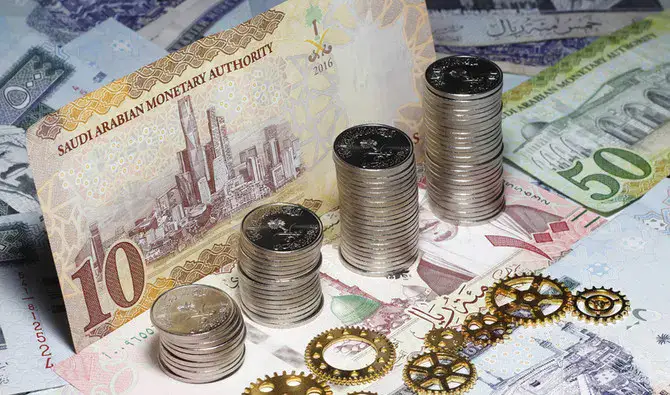
The story of Saudi Arabia can be told through many things: its people, its cities, its vision for the future. But one of the quietest storytellers has always been its currency. The Saudi Riyal History begins long before the notes and coins we know today. It began in the markets, in the hands of traders and pilgrims, and grew with the Kingdom itself. From simple silver coins to the modern polymer notes in circulation now, each change in the Riyal reflects how Saudi Arabia has grown, adapted, and found its place in the world.
Early Foundations
Long before the Saudi Riyal existed, trade in the Arabian Peninsula flowed through barter and foreign coins. In the early 1900s, merchants relied on what was available, namely Austrian Maria Theresa Thalers, Ottoman Majidi Riyals, British Sovereigns, and Indian Rupees. Among them, the Thaler became a favorite. Known locally as “Alriyal Alfransi,” it was trusted for its silver purity and weight, even though it wasn’t Saudi-made.
When King Abdulaziz reclaimed Riyadh in 1902, he began shaping a monetary identity for the nation he was building. In 1922, he took the first step toward standardization by stamping the word “Najd” on widely used foreign coins, making them official within his realm. By 1925, after unifying Najd and Hijaz, he issued the first Saudi coins: copper pieces in quarter and half qirsh denominations, marked with “Umm al-Qura,” a proud reference to Makkah.
Establishing the Saudi Riyal
A Royal Decree in 1928 changed everything. It introduced the Hejazi-Najdi Currency Law, which prohibited foreign currency circulation and defined the first official Saudi Riyal. Equal in weight and silver content to the Ottoman coin, this Riyal became the standard of trade across the Kingdom.
In 1935, the name “Kingdom of Saudi Arabia” appeared for the first time on the Riyal, engraved alongside King Abdulaziz’s name and the emblem of crossed swords and a palm tree. Two years later, copper-nickel coins entered circulation, making smaller transactions easier and unifying commerce under one monetary system.
By the mid-1940s, a new challenge emerged. Money changers began hoarding smaller denominations, disrupting circulation. To stabilize the system, the state counterstamped “65” on all coins in 1946, restoring public confidence. Then came 195, a milestone year, when the first gold coin was minted. It matched the British Sovereign in weight and quality, symbolizing the Kingdom’s growing economic stature.
The SAMA Era and the Arrival of Paper
As Saudi Arabia’s economy expanded, silver coins proved heavy and impractical, especially for pilgrims traveling during Hajj. In 1952, King Abdulaziz approved the creation of the Saudi Arabian Monetary Agency (SAMA), which became the second-oldest central bank in the Arab world. It was tasked with managing the nation’s currency, stabilizing value, and supervising banks.
The following year brought innovation. SAMA introduced the “Pilgrims’ Receipts”, paper money that made transactions easier during pilgrimage seasons. The first issue carried a value of ten Riyals, printed in six languages. The public welcomed it immediately. Within three years, one-Riyal and five-Riyal receipts followed.
By 1961, SAMA issued the first official paper currency. It came in denominations of one, five, ten, fifty, and one hundred Riyals, each featuring Saudi landmarks such as Al-Nur Mountain, Masmak Palace, and Jeddah Port. The shift from heavy coins to lightweight notes marked a new era in Saudi Riyal History. One of modernization and growing public trust.
Successive Series and National Progress
Each new reign brought an updated currency design, reflecting both leadership and national progress.
- King Faisal’s Series (1968) introduced refined designs and religious imagery, featuring the Holy Mosques of Makkah and Madinah.
- King Khalid’s Series (1976) kept the familiar denominations but upgraded security and printing quality.
- King Fahd’s Series (1984) added the 500 Riyal note for the first time. Portraits of rulers appeared alongside national landmarks. The Great Mosque and the Prophet’s Mosque took center stage, symbolizing the Kingdom’s identity as the heart of the Islamic world.
These decades defined the Saudi currency as a national emblem. Every note told a story of unity, faith, and development, while new printing technologies guarded against counterfeiting.
The Modern Leap
The late 1990s and 2000s brought color, technology, and symbolism into Saudi currency. In 1999, to celebrate 100 years since the Kingdom’s founding, SAMA issued special 20 and 200 Riyal commemorative notes featuring King Abdulaziz.
In 2007, the fifth series was released under King Abdullah. These notes balanced tradition with technology. They introduced vibrant colors, intricate watermarks, and detailed designs showing the Ras Tanura refinery, Jubayl Port, and the Kaaba in Makkah. It was a perfect blend of history and progress.
Then came a defining moment in 2016, when SAMA launched the sixth series under King Salman. The new set replaced the one-Riyal note with coins and showcased Vision 2030 themes through its design. The pastel colors, modern landmarks, and high security features reflected the confidence of a nation stepping into a new era.
The Polymer Revolution
In 2020, Saudi Arabia entered a new chapter in its currency story with the introduction of polymer banknotes. The first was a five-Riyal note. It was lightweight, durable, and equipped with advanced security elements like color-shifting inks and transparent windows. It featured King Salman on one side and the Shaybah oil refinery on the other, connecting leadership and industry in a single frame.
That same year, a special 20 Riyal commemorative note was released to mark Saudi Arabia’s presidency of the G20. Its design highlighted the Kingdom’s position on the global stage, with a map showing the world’s major economies converging on Saudi soil.
In 2021, another commemorative note followed, the 200 Riyal Vision 2030 edition, honoring five years of the Kingdom’s transformation plan. It portrayed King Abdulaziz and the historic Qasr Al Hukm, representing the link between heritage and ambition.
These modern issues brought global attention and marked a new chapter in the Saudi Riyal History, showcasing how design could carry both national pride and future vision.
SAMA Becomes the Saudi Central Bank
Also in 2020, King Salman approved the Saudi Central Bank Law, officially transforming SAMA into the Saudi Central Bank. The institution kept the acronym “SAMA” in recognition of its legacy but gained new powers. It became directly accountable to the King, ensuring independence while driving stability and growth.
Its mission expanded to include maintaining monetary stability, supporting financial confidence, and guiding the nation’s economy in alignment with Vision 2030. Through this evolution, the Saudi Riyal remained the anchor of trust. It is stable, respected, and deeply tied to the country’s progress.
The Strength Behind the Riyal
The Saudi Riyal operates on a fixed exchange rate pegged to the US dollar since 1986, holding steady at 3.75 Riyals per dollar. This consistency has been central to economic planning and trade, giving both citizens and investors confidence in the national currency.
The Saudi Riyal’s security has advanced alongside technology. Early notes used simple watermarks and threads, while recent series include holograms, tactile surfaces for accessibility, and three-dimensional color features. The 2020 polymer note added another layer of protection, showing how design and innovation keep the currency both secure and sustainable.
A Reflection of Saudi Progress
Every era of Saudi currency tells its own story. The silver coins spoke of unity. The first paper notes represented modernization. The polymer series symbolizes innovation and global integration. Together, they form a living record of the nation’s economic, cultural, and spiritual journey.
The Saudi Riyal History is not just about money but about identity. It’s about how the Kingdom moved from local trade to a sophisticated financial system respected around the world. It’s about how every note and coin carries the promise of progress, shaped by the vision of its leaders and the ambition of its people.
Legacy in Every Riyal
Seven decades on, the Saudi Riyal stands as a witness to the Kingdom’s rise. Although it has changed in material, design, and value, its meaning remains constant: stability, pride, and trust.
As Saudi Arabia continues its journey under Vision 2030, the Riyal will keep evolving with it. New technologies will emerge, new designs will appear, yet its story will always be rooted in the same foundation laid by King Abdulaziz: strength, unity, and faith in the future.
The Saudi Riyal History is, in truth, the story of Saudi Arabia itself. One of resilience, purpose, and progress.
FAQs
When was the Saudi Riyal first introduced?
The first official Saudi Riyal was introduced in 1928 following the Hejazi-Najdi Currency Law, which unified the nation’s monetary system and prohibited the use of foreign currencies in local trade.
What is the Saudi Riyal’s exchange rate against the US dollar?
The Saudi Riyal has been pegged to the US dollar since 1986 at a stable rate of 1 USD = 3.75 SAR. This peg ensures economic stability and supports Saudi Arabia’s position in global trade.
What was the significance of the polymer Riyal introduced in 2020?
The polymer five-Riyal note launched in 2020 marked a milestone in the Saudi Riyal History. It introduced advanced security features, increased durability, and aligned with the Kingdom’s sustainability and modernization goals under Vision 2030.
Follow us on Instagram for daily travel inspiration and untold stories from the Kingdom. Want more? Explore more experiences and stories in our History and Heritage category.
This article is brought to you by Soul of Saudi (a Saudi travel blog dedicated to uncovering the beauty, heart, and soul of the Kingdom).