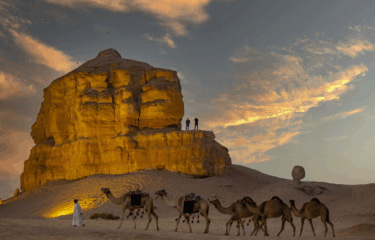










The endless Saudi desert has always been ‘alive’ with promises, and the current growth trajectory in the Kingdom is not just brimming from oil rigs and pipelines, but it’s about tech-driven factories humming with innovation. This is the vision of Saudi industrial incentives phase 2—a bold step into a future where the Kingdom pivots from hydrocarbon dependency to automation, manufacturing, and creativity. On June 23, at the Saudi Industry Forum in Dhahran, Deputy Minister Khalil Ibn Salamah launched this game-changing program, one that marks not just policy, but purpose.
No small feat, this second phase opens with robust funding up to SAR 50 million (≈US$13.3 million), covering 35% of new investment in Chinese-numbered sectors like aviation, medical devices, or building materials. More than capital, investors gain seven years of support across the build and production phases. That’s stability; that’s Saudi saying, “We’ve got your back.”
What the Incentives Include and Who Wins?
Rather than just sweetening deals, the Saudi industrial incentives phase 2 grants both financial heft and operational freedom. Whether you’re constructing a modern factory or setting up a smart production line, the support keeps flowing. It’s a two-pronged reinforcement plan: one arm for physical growth (construction help), the other for scale and sustainability (production incentives).
The spotlight now widens. Beyond chemicals, automotive, and machinery that are already supported under phase 1, the program now embraces new sectors:
- Aviation and aerospace
- Medical devices and pharmaceuticals
- Food processing
- Maritime and mining
- Building materials
These industries largely play into Saudi Vision 2030, which aims to cultivate jobs, localize production, and fuel economic diversification.
A Kingdom Reoriented
Here, the desert’s transformation is symbolic. Saudi industrial incentives phase 2 represents a strategic shift toward:
- Localization: Making, not importing.
- Import substitution: Strengthening homegrown supply chains.
- Economic diversification: Integrating new industries to complement existing ones.
It’s not merely about metal and machinery. It’s about resilience. With more than 1,900 industrial projects underway and SAR 380 billion tied up in 61 industrial cities, Saudi Arabia stands at the brink of becoming a manufacturing powerhouse.
From Feedstock to Finished Goods
Chemicals already form the backbone of phase 1. With the Wafrah program propelling polypropylene use 40% up and capacity utilization to 27%, Saudi Arabia sees both potential and velocity. Phase 2 aims for acceleration: specialty chemical output may surge four to five times, and basic chemicals could leap by over 12 million tons yearly by 2035. For petrochemical towns like Jubail and Yanbu, this signals long-term industry stability.
Public-Private Synergy in Action
Behind the grand numbers, the success story hinges on private sector buy-in. As the Deputy Minister noted, the private sector is “indispensable”. To nudge investors in, infrastructure clusters built by MODON, NEOM’s Oxagon, Jubail, and Yanbu are being fast-tracked. Think power, logistics, water facilities already onsite and ready to go. That means projects break ground faster and run smoother.
Smart Factories, Export, & Digital
It’s not just about assembly lines; it’s about intelligent ones. With this program, smart systems ride alongside concrete and they carry a digital badge of Saudi ambition. Aramco forecasts a 15–25% productivity boost for industrial players that adopt 4IR technologies: AI, IoT, robotics, and cybersecurity. This is modernization, powered by Saudi industrial incentives phase 2.
On the other side, Globalization isn’t dead and it’s evolving. Bahrain now partners with Saudi Arabia as the two drive GCC-wide industrial linkages under phase 2. Meanwhile, export ambitions rise and incentives now favor manufacturing for global markets. Even small parts producers can scale regionally and globally thanks to this GCC alignment.
Timeline & How to Apply As An Industrialist?
Phase 2 opens the investment gate in early August, with support only a click away on portals like Invest Saudi and Senaei. Phase 1 (January 2025) already drew over 1,000 inquiries and 118 applications; a dozen investors are in final qualification. With lessons learned from phase 1, this rollout promises smoother onboarding, clearer terms, and stronger returns.
Vision 2030 – Not Just Words on Paper
Through this initiative, Saudi Arabia adds substance to Vision 2030. It layers industrial strength onto cultural, tourism, and digital transformation—creating an economy that’s diverse, sustainable, and forward-looking. The Saudi industrial incentives phase 2 forms the spine of this diversification, with resilience and progress at its core.
By offering up to 35% of investment and broad opportunity across sectors, it marks the Kingdom’s assertion as a regional manufacturing hub. It doesn’t just ask global investors to come—it invites them to build alongside Saudi.
Investors who can blend capital with digital savvy, and who see the deserts as fertile ground for ingenuity, stand to reap more than profits—they will gain partnership in a vision of national growth.
FAQs.
Who qualifies for the Phase 2 industrial incentives?
Eligible investors include mid-to-large-scale manufacturers in supported sectors from food and pharma to maritime, aligned with Vision 2030 localization goals.
How much financial support can projects receive?
Projects can receive up to SAR 50 million or 35% of their investment, whichever is higher, with incentives allocated across construction and production phases.
When and how can an investor apply?
Applications open in August via platforms like Invest Saudi and Senaei. Early inquiries from phase 1 already show strong market interest.
Which digital technologies gain support?
Supported tech includes AI, robotics, IoT, cybersecurity, and “factory-edge” automation designed to optimize efficiency and resilience.
How does Phase 2 fit into Vision 2030 goals?
The program actively supports localization, supply-chain resilience, employment, exports, GCC integration, and overall diversification—the core pillars of Vision 2030.
Follow us on Instagram for daily travel inspiration and untold stories from the Kingdom. Want more? Explore more experiences and stories in our Business and Innovation category.
This article is brought to you by Soul of Saudi — a Saudi travel blog dedicated to uncovering the heart and soul of the Kingdom.