








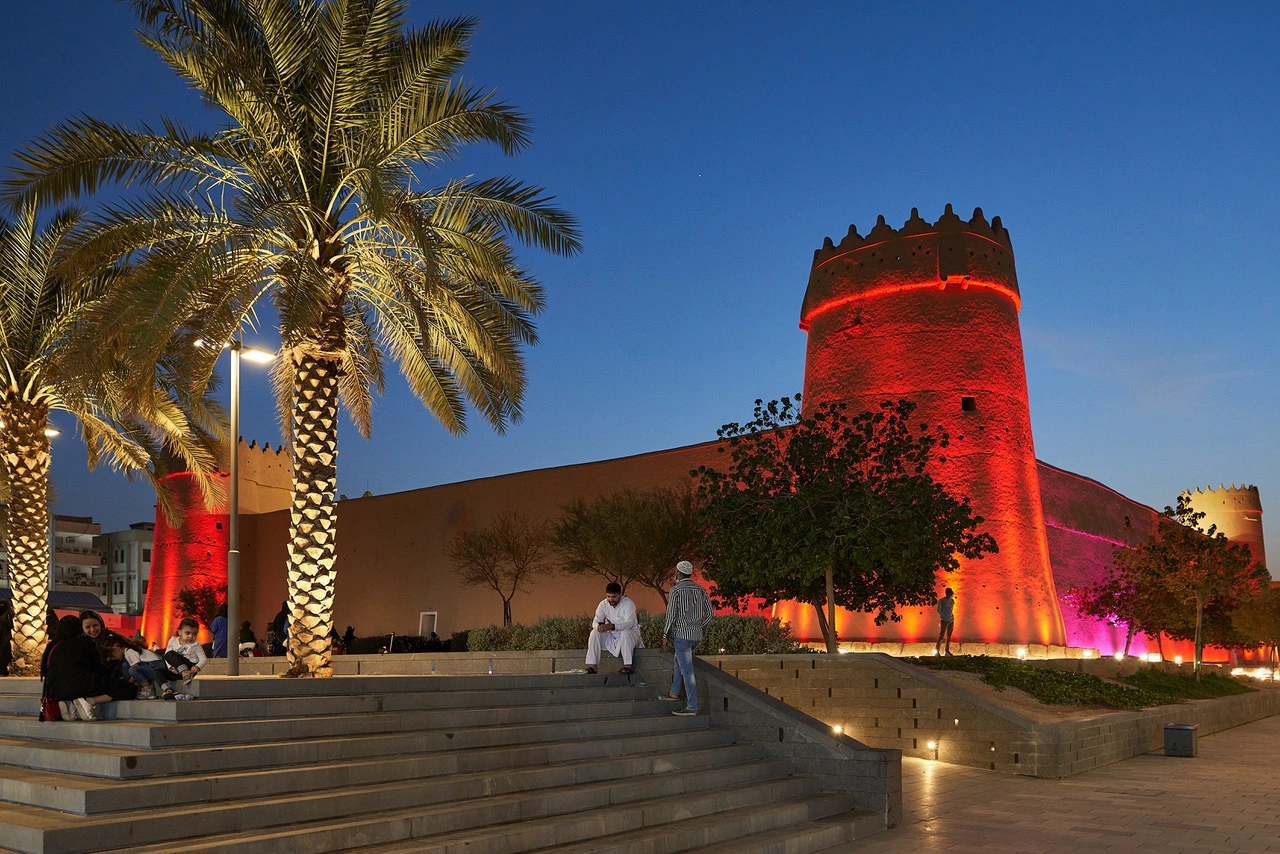
Present the beating heart of Riyadh’s ancient quarter, Masmak Fortress, rises from the golden dust like a sentinel of legacy. Its story began in 1865, shaped from clay and earth under the command of Abdullah bin Faisal Al Saud. But it was in 1902, during the pre-dawn silence, that its walls witnessed destiny as a young King Abdulaziz launched his fearless raid through its gates, reclaiming his birthplace and lighting the fire that would forge a nation. Masmak Fortress Riyadh history lives on not in silence, but in echo; a restored museum today, it thunders with pride, memory, and the pulse of Saudi identity.
Masmak Fortress Riyadh history begins with its construction in the late nineteenth century as a fortified mudbrick citadel in the heart of Najd. The phrase Masmak Fortress Riyadh history evokes images of King Abdulaziz’s daring 1902 raid to reclaim Riyadh and launch the unification of the Kingdom. Every wall and tower within the Masmak Fortress history stands witness to the pivotal Battle of Riyadh that reshaped Arabian politics.
A Citadel of Unification
Crafted from Najdi mudbrick architecture, thick walls, fortified watchtowers, and a palmwood gate featuring the narrow “al-Khokha” entrance, Masmak exemplifies traditional desert design. Its strategic layout blends form and function, built to withstand heat and siege. The fortress became legendary in January 1902, when King Abdulaziz and 63 men stormed it at dawn, reclaiming Riyadh from the Al Rashid dynasty and reshaping Arabian politics.
The Fortress Turned Into a Museum
By the early 20th century, Masmak served as a munitions warehouse until the Royal court relocated in 1938. In 1979, restoration began, and in 1995, it was reborn as the Al Masmak Palace Museum.
Visitors now walk through halls filled with antique weaponry, traditional garments, archival photographs, interactive exhibits, and a documentary film that dramatizes the Battle of Riyadh. Admission is free, with a small parking fee typical at nearby lots.
Architectural Heritage & Najdi Style in Focus
The fortress is an archetype of Najdi architectural style with earth-toned, insulated, and structured around a central courtyard. Its layout includes a mosque with Quran shelves and natural ventilation holes, a majlis for social gatherings, and four corner towers used for surveillance. These design elements reflect a balance of tradition, climate adaptation, and cultural aesthetics.
A National Memory. A Fortress.
Stepping into Masmak’s courtyard plasm, you feel the layers of history beneath your feet. Audio-visual displays, battle maps, and sword replicas bring the past alive. The museum fosters a tangible sense of national unity, making history feel immediate and deeply human. Highlights include:
- A spear still lodged in the wooden gate from the 1902 battle
- Dioramas depicting the siege and rise of the House of Saud
- Old photographs capturing early Riyadh and its people
- The final courtyard film that reenacts the reclaiming of the fort
Legacy & Historical Tourism
Masmak Fortress became a flagship site in the King Abdulaziz Historical Centre in 1999, commemorating the centenary. The centre includes museums, parks, and heritage displays, and highlights the fort’s role in shaping Saudi identity. As tourism grows under Vision 2030, Masmak has remained central, hosting school trips, cultural festivals, and global visitors arriving to witness the birthplace of modern Saudi Arabia.
Here are some practical tips for visiting the grand fortress in Riyadh from your history and cultural wanderlust folks at Soul of Saudi.
| Detail | Info |
| Location | Qasr al-Masmak, Al Imam Turki ibn Abdullah, Dirah, Riyadh |
| Opening Hours | Typically 8 AM–9 PM (Wed–Sun), shorter hours Fri & Sat |
| Entry Fee | Free admission; approx. SAR 5–10 for parking |
| Tour Options | Guided tours in Arabic and English; audio guides and group visits |
| Nearby sights | Al‑Hukm Mosque, heritage souqs, Justice Square |
Visitors should arrive early to avoid midday heat and allow at least 45–60 minutes to explore the museum and courtyard. Guided tours offer deeper insight into battle strategy, architecture, and Saudi lineage.
A Story, A Nation United!
Masmak Fortress Riyadh history is more than dusty walls, it’s the origin point of modern Saudi identity. Today, it stands humble yet proud, welcoming those who wish to walk in the footsteps of unification and vision. From the speck of clay bricks to the echo of ancient footsteps in its chambers, Masmak invites you to see not just a fort, but the pulse of a nation reborn. Explore history here and feel Saudi Arabia’s spirit in every adobe corner.
FAQs
Why is Masmak Fortress significant in Saudi history?
It was the site of King Abdulaziz’s 1902 raid that reclaimed Riyadh, launching the unification of Saudi Arabia.
When was the fort built?
Construction began in 1865 during the Second Saudi State and was completed in 1895 under Al Rashid’s oversight.
What architectural features does the fort represent?
Masmak reflects Najdi mudbrick architecture, with watchtowers, a courtyard, a mosque, a majlis, and defensive gateways.
What can visitors see inside the museum?
Historical weapons, battle dioramas, early 20th-century photos, traditional costumes, maps, and an immersive documentary.
Is there an entry fee?
No. Masmak Fortress Museum offers free access. Parking may cost around SAR 5–10.
What should visitors wear or bring?
Wear comfortable walking shoes, modest attire, and bring a bottle of water. Early morning visits are best to beat the heat.
Follow us on Instagram for daily travel inspiration and untold stories from the Kingdom. Want more? Explore more experiences and stories in our History and Heritage category.
This article is brought to you by Soul of Saudi (a Saudi travel blog dedicated to uncovering the beauty, heart, and soul of the Kingdom)