








Most countries welcome dignitaries with a red carpet.
Saudi Arabia looked at that global script… and chose to write its own.
Today, when heads of state arrive in the Kingdom, they are greeted by a striking lavender walkway instead. It photographs beautifully, stands out instantly, and more importantly, it tells a story before a single word is spoken.
Understanding the importance of color purple in Saudi Arabia starts here, at the intersection of tradition, landscape, and a country increasingly comfortable defining its own visual language.
Because this was never a random color swap.
It was intentional.
It Actually Starts in the Desert
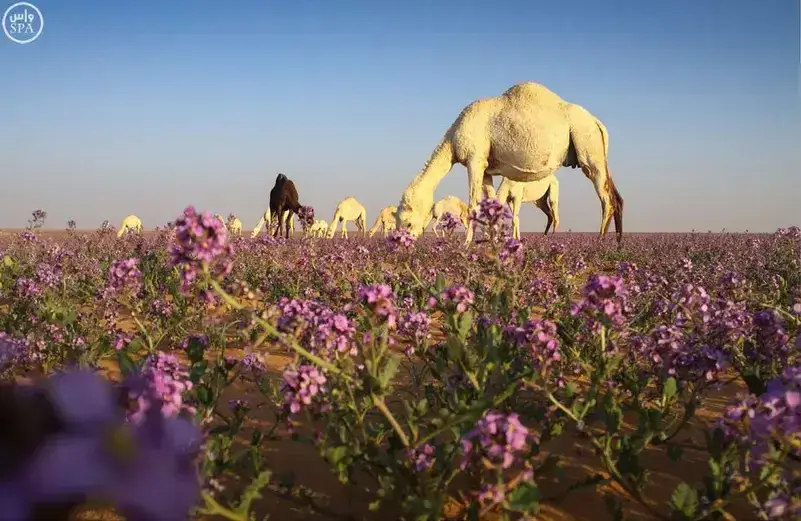
For a few weeks every spring, parts of Saudi Arabia shift color.
Lavender and wildflowers push through the desert floor. In the Asir region, hillsides pick up violet tones, and jacaranda trees soften entire streets in Abha. The landscape feels briefly rewritten.
This is the palette Saudi Arabia chose to carry into its ceremonial traditions.
The Saudi lavender carpet mirrors those seasonal blooms, grounding official protocol in something unmistakably local.
Not imported symbolism. Not borrowed prestige.
Just the land, translated into ceremony.
Why Walk Red When You Can Walk Recognizable?
Red carpets are universal. Purple is memorable.
In 2021, the Ministry of Culture and the Royal Protocol introduced lavender carpets for official receptions, making Saudi Arabia one of the few nations to step away from the expected.
The message was subtle but clear.
Saudi Arabia is not interested in looking like everyone else.
The move also positioned purple as a modern expression of Saudi ceremonial traditions and symbolism, one that blends hospitality with cultural confidence.
When Crown Prince Mohammed bin Salman welcomed Sheikh Mohammed bin Zayed on the lavender carpet, the images traveled globally within minutes.
No explanation needed.
The color spoke for itself.
Hospitality, But Make It Saudi
In many cultures, the carpet is about prestige.
Here, it is also about welcome.
Purple was chosen to reflect generosity, a value deeply woven into Saudi social life. It signals that guests are being received with intention, not routine protocol.
This is where the purple hospitality symbolism in Saudi culture becomes especially visible. The gesture feels warm without being performative.
Ceremony, after all, is often about the details people remember later.
Look Closer! Tradition Is Woven Into It
The edges of Saudi Arabia’s ceremonial carpets feature Sadu weaving, a Bedouin craft recognized by UNESCO as intangible cultural heritage.
Historically created by women using natural fibers, Sadu patterns echo desert geometry and nomadic life. What was once practical textile work now carries cultural weight across the region.
Integrating it into modern protocol does something clever.
It keeps heritage moving forward instead of freezing it in the past.
The result is a carpet that is both contemporary and unmistakably rooted.
Purple Also Carries Quiet Power
Long before modern diplomacy, purple signaled rarity. Producing the dye was expensive, which tied the color to status and refinement across civilizations.
Saudi Arabia builds on that legacy but reshapes it.
Here, purple is not about distance or hierarchy. It balances prestige with approachability, aligning naturally with the Kingdom’s evolving global presence.
It is a confident choice. Not loud. Not decorative.
Just distinct.
A Marker of Cultural Ease
Perhaps the most interesting part of this story is what it reveals about Saudi Arabia today.
Choosing purple suggests a country comfortable enough to step away from default global traditions and shape its own.
No grand announcement required.
Just roll out the carpet.
Understanding the importance of color purple in Saudi Arabia is really about recognizing this growing cultural ease, where heritage, landscape, and modern ambition sit comfortably side by side.
And if you ever find yourself walking across that lavender path, you will realize something quickly.
Some statements do not need explaining.
They just need to be seen.
FAQs
Why does Saudi Arabia use purple carpets?
Saudi Arabia adopted lavender carpets inspired by spring flowers, symbolizing hospitality, cultural identity, and a distinctive national presence.
When did Saudi Arabia replace the red carpet?
The purple ceremonial carpet was introduced in 2021 through a joint initiative between the Ministry of Culture and the Royal Protocol.
What does the lavender carpet represent?
It reflects generosity, tradition, and the Kingdom’s natural landscape while reinforcing modern Saudi cultural expression.
What is Sadu weaving on Saudi carpets?
Sadu is a traditional Bedouin weaving technique recognized by UNESCO, incorporated to honor Saudi craftsmanship.
How does purple connect to Vision 2030?
The color supports Saudi Arabia’s cultural positioning by promoting heritage, tourism, and a strong global identity.
Follow us on Instagram for daily travel inspiration and untold stories from the Kingdom. Want more? Explore more experiences and stories in our Arts and Culture category.
This article is brought to you by Soul of Saudi (a Saudi travel blog dedicated to uncovering the beauty, heart, and soul of the Kingdom).