









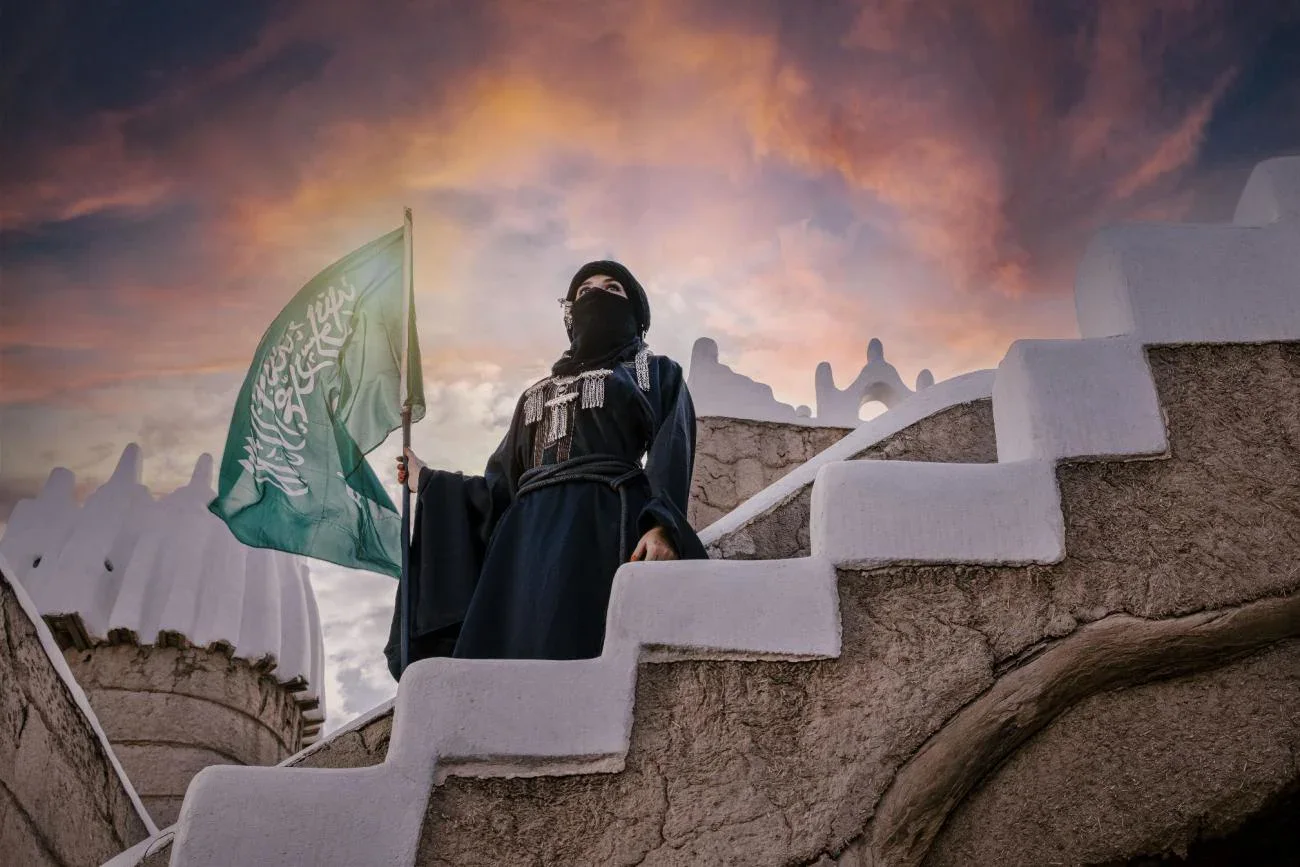
Every nation has a moment when direction replaces uncertainty. For Saudi Arabia, that moment traces back nearly three centuries to Diriyah, where leadership, stability, and vision began shaping what would become the modern Kingdom.
The History of Founding Day in Saudi Arabia reaches far beyond a single date on the calendar. It speaks to continuity, to roots that held firm through shifting eras, and to a society built with intention rather than chance.
Each year on February 22, the country pauses to acknowledge where the story truly began.
Where The Saudi Story First Took Hold
Long before today’s cities rose across the landscape, central Arabia was home to settled communities shaped by trade routes and tribal alliances. Among the earliest was the Banu Hanifah tribe, whose presence helped establish Al-Yamama in the Najd region.
Centuries later, in 1446, Prince Mani’ ibn Rabi’a Al-Muraydi returned to this ancestral land and founded Diriyah along Wadi Hanifah. What began as a growing settlement steadily developed into one of the region’s most influential centers.
Diriyah did not emerge overnight. Generations strengthened its position, allowing it to evolve into a place ready for leadership when the time arrived.
1727: The Beginning Of The First Saudi State
The defining chapter opened when Imam Muhammad bin Saud assumed leadership of Diriyah on February 22, 1727. With a clear governing vision, he focused on securing the region, organizing its economic life, and strengthening connections between surrounding towns and tribes.
Trade routes were protected. Stability became a priority. Defensive structures were reinforced.
These were decisions rooted in long-term thinking, and they laid the groundwork for the First Saudi State.
Understanding this turning point is essential to appreciating the history of Founding Day in Saudi Arabia, because it marks the start of a political and social foundation that continues to influence the nation today.
Leadership Built On Unity And Stability
Imam Muhammad bin Saud was raised within Diriyah’s leadership environment, learning governance by observing his father and grandfather. When responsibility passed to him, his approach centered on cohesion.
Rather than allowing fragmentation to define the region, he worked toward alignment, bringing communities into a more stable framework while supporting pilgrimage and commercial movement across the area.
This emphasis on unity remains one of the most enduring themes connected to the Saudi Founding Day history.
Why Founding Day Is Different From National Day
Both occasions hold deep meaning, yet each reflects a different chapter.
Founding Day honors origins. It looks back to the establishment of the First Saudi State and the early formation of national identity.
National Day commemorates the unification of the Kingdom in 1932 under King Abdulaziz.
One marks the beginning of the story. The other celebrates its consolidation.
Together, they frame a timeline defined by resilience and continuity.
A Royal Recognition Of Deep Roots
The designation of February 22 as Founding Day came through a royal decree issued by the Custodian of the Two Holy Mosques, King Salman bin Abdulaziz Al Saud. The decision formally acknowledged the historical depth of the Saudi state and reinforced the importance of remembering its earliest foundations.
More than a historical reference, the day encourages reflection on the strength, security, and cohesion that have supported the nation across generations.
At its core, the history of Founding Day in Saudi Arabia is a reminder that progress carries greater meaning when its origins remain visible.
How The Kingdom Marks The Occasion
Across Saudi Arabia, Founding Day unfolds through cultural expression rather than simple ceremony.
Historic exhibitions revisit early Saudi life. Traditional attire appears across public spaces. Folk performances and Ardah dances draw crowds that span generations.
Museums, heritage districts, and cultural centers become natural gathering points, while storytelling continues to pass history forward.
The atmosphere leans reflective yet celebratory, grounded in pride without losing sight of the journey that made the present possible.
Diriyah: Where Past And Future Meet
Today, Diriyah stands as a powerful physical link to that early chapter. The At-Turaif district, recognized as a UNESCO World Heritage Site, preserves the architectural language of the First Saudi State while welcoming a global audience.
Its ongoing transformation into a cultural destination reflects a national approach that values preservation alongside progress.
Places like Diriyah allow the history of Saudi Founding Day to remain experienced rather than remembered from a distance.
A Legacy Still In Motion
Founding Day does more than revisit the past. It reinforces a national mindset shaped by endurance, leadership, and forward vision.
The same principles that guided Diriyah continue to inform Saudi Arabia’s trajectory today, from cultural investment to economic expansion and global engagement.
Seen through this lens, Founding Day becomes less about looking back and more about recognizing the depth behind every step forward.
Because when roots run deep, growth follows naturally.
FAQs
What is the history of Founding Day in Saudi Arabia?
It commemorates the establishment of the First Saudi State in 1727 under Imam Muhammad bin Saud in Diriyah.
Why is Founding Day celebrated on February 22?
The date marks the beginning of Imam Muhammad bin Saud’s rule and the formation of the Saudi state.
How is Founding Day different from Saudi National Day?
Founding Day honors the origins of the state, while National Day celebrates the unification of the Kingdom in 1932.
Who founded the First Saudi State?
Imam Muhammad bin Saud established the First Saudi State and set the foundation for long-term stability.
Why is Diriyah important to Saudi history?
Diriyah served as the capital of the First Saudi State and remains a symbol of the nation’s historical roots.
Follow us on Instagram for daily travel inspiration and untold stories from the Kingdom. Want more? Explore more experiences and stories in our History and Heritage category.
This article is brought to you by Soul of Saudi (a Saudi travel blog dedicated to uncovering the beauty, heart, and soul of the Kingdom).