








In Saudi Arabia, the past never really left. It lingers in the lines of old fort walls, in the curve of new skylines, and in the stories told under desert stars. The Kingdom is moving fast, but its roots still anchor every new idea that rises from the sand. You can see it in the way cities are being built, art is being made, and stories are being told. The spirit of Ancient Arabia in modern Saudi Arabia is part of the evolution.
This connection between old and new is reshaping how the country looks, feels, and creates. The same land that once guided caravans across endless dunes now leads travelers through smart cities, light art festivals, and reimagined heritage sites. And through it all, the rhythm of the desert still hums quietly beneath the surface.
Caravans to Highways
Long before highways and high-speed trains, traders and pilgrims crossed the Kingdom on foot and camelback. They carried spices, silk, and stories along the Incense Route, a network that connected southern Arabia to the Mediterranean. AlUla was one of its most important stops.
That spirit of movement still defines Saudi Arabia today. The country’s modern infrastructure mirrors those ancient paths in scale and ambition. Projects like the Saudi Landbridge now connect Jeddah to Dammam through Riyadh, shrinking week-long journeys into hours. The Haramain High-Speed Rail links Makkah and Madinah at 300 km/h, carrying millions of pilgrims each year. These routes connect history to progress.
In the northwest, NEOM’s The Line pushes the idea of connectivity even further. A 170-kilometer city powered by renewable energy, built to preserve the desert that hosted Arabia’s early civilizations. It’s a modern reflection of how movement once shaped identity, not through conquest or expansion, but through connection.
And in AlUla, new tram lines carry visitors past ancient tombs and sandstone valleys once walked by traders. These journeys remind every traveler that the roads of today are built on paths laid thousands of years ago. The story of Ancient Arabia in modern Saudi Arabia begins with the same horizon, just a different way of crossing it.
From Mud to Marble
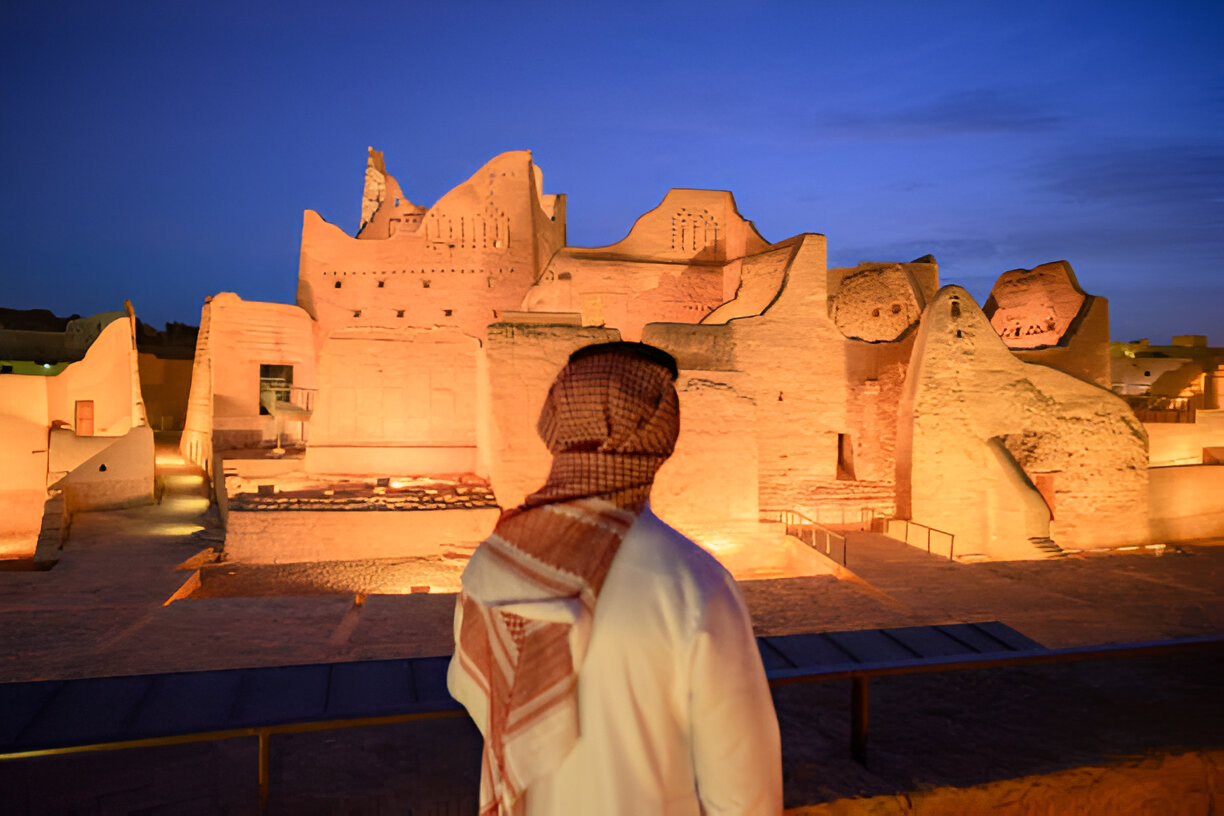
The Kingdom’s new cities may gleam, but their foundations are rooted in the earth. Long before glass towers, there was mudbrick, shaped by hand to keep homes cool under the fierce sun. You still see echoes of it in the narrow lanes of Diriyah, where walls curve and alleys breathe. That same simplicity is now guiding how modern Saudi Arabia builds.
The transformation of Diriyah Gate captures this shift perfectly. Once the birthplace of the first Saudi state, it’s now one of the Kingdom’s most ambitious heritage projects. Old Najdi design with thick walls, shaded courtyards, and triangular windows has inspired a new wave of architecture that values identity as much as innovation. The Bab Samhan Luxury Collection Hotel brings this to life with clay-toned facades, palm courtyards, and soft lantern light that makes every corner feel timeless.
Across the Kingdom, this approach has a name: Salmani architecture. It’s a style that carries traditional geometry into modern design. Riyadh’s new buildings reflect this philosophy with simple lines, textured walls, and courtyards that invite light instead of blocking it.
In AlUla, Desert Rock Resort takes it a step further. Built directly into cliffs, it borrows the natural artistry of Nabatean tombs that have stood for 2,000 years. The resort’s glass and stone structures merge with the landscape harmoniously. You realize that modern luxury in Saudi Arabia isn’t about excess but about belonging to the place, to its memory, and to the land that made it.
From Petroglyphs to Public Art
Before there were museums or galleries, there were carvings on stone. On cliffs in Hail, at Jubbah and Shuwaymis, artists once etched their lives into rock, animals, hunts, rituals, and symbols of a world in motion. These petroglyphs, dating back over ten thousand years, were the Kingdom’s first art. Today, they’re inspiring a new generation of Saudi creators who are turning the desert itself into their canvas.
Noor Riyadh, the world’s largest light art festival, transforms the capital into a city-sized gallery. Light installations shine against the skyline like modern echoes of those ancient carvings. Millions of visitors walk through parks and plazas that celebrate creativity the same way ancient artists once celebrated survival. Through expression.
Farther north, Desert X AlUla bridges old art and new ideas. The exhibition places modern installations in the middle of sandstone valleys, creating a dialogue between ancient landscapes and contemporary imagination. Sculptures rise where once there were carvings. Sound installations whisper in the wind that shaped the rocks. Soon, Wadi AlFann will become a permanent open-air museum for land art, connecting artists from around the world with the Kingdom’s oldest forms of storytelling.
Saudi artists like Manal AlDowayan are carrying this forward. Her installations and sculptures explore what it means to be Saudi, to evolve, to remember. In her work, you can trace a line from the petroglyphs of Hail to the studios of Riyadh. The same urge to leave a mark remains.
Ancient Arabia in modern Saudi Arabia lives on through this creativity. It continues the story of the past, keeping its spirit alive in new forms of art.
From Ukaz to Instagram
Long before cinema or social media, stories traveled through voices. At Souq Ukaz, poets once gathered under desert tents to compete with words, reciting verses that shaped the Arabic language and carried pride across tribes. Those same instincts, to share, connect, and move people, still impact how Saudis tell stories today.
Modern storytellers have simply found new stages. Platforms like YouTube, TikTok, and Instagram are filled with Saudi voices reclaiming narrative, just as the poets of Ukaz once did. Creators like Rateel Alshehri use storytelling to inspire and connect with younger audiences. The tools have changed, but the purpose hasn’t.
Even the festival of Souq Okaz has returned as a living link between old and new. Visitors still gather to hear poetry, but now their words reach millions through livestreams and hashtags. Film has joined the chorus, too. Saudi filmmakers are weaving heritage into stories that travel globally. The movie Norah, filmed in AlUla, became the first Saudi film screened at Cannes. It’s proof that storytelling from this land continues to find new ears.
Fashion designers, musicians, and writers are all part of this revival. They’re turning memory into movement, reminding the world that culture doesn’t fade when it changes form. The same spirit that filled desert gatherings now fills digital spaces. It’s still Ancient Arabia in modern Saudi Arabia, just told in pixels instead of poetry.
A Past That Still Breathes
In Diriyah’s markets, Riyadh’s galleries, and AlUla’s sandstone valleys, the connection between past and present is clear. Every new place holds a trace of what came before. Trade turned into tourism, mud homes became marble hotels, stories found new life on screens, yet the soul of it all remains.
Saudi Arabia is carrying its history forward with pride. Each project under Vision 2030, from caravan-inspired highways to resorts carved into cliffs, shows how progress and heritage can grow side by side.
Ancient Arabia in modern Saudi Arabia isn’t a theme or a campaign. It’s the Kingdom’s identity. It reminds us that the future carries the past forward, softly but surely, into everything you build next.
FAQs
How does Ancient Arabia influence modern Saudi Arabia today?
Ancient Arabia in modern Saudi Arabia appears everywhere, in the design of new cities, the revival of old trade routes, and the creative industries shaping Vision 2030. The Kingdom’s projects build on centuries of desert wisdom, from sustainable architecture to art that honors history.
What is Najdi architecture and how is it used in modern Saudi design?
Najdi architecture comes from central Saudi Arabia, known for its thick mudbrick walls, narrow windows, and shaded courtyards that suit desert life. Today, these same principles guide developments in Diriyah and Riyadh, where architects use natural materials and local geometry to blend heritage with modern comfort.
How do Saudi art festivals connect to the Kingdom’s ancient heritage?
Events like Noor Riyadh and Desert X AlUla continue a long tradition of storytelling through art. Where ancient people carved petroglyphs on rock, today’s artists use light, sound, and sculpture to express the same connection to land and memory.
How are ancient trade routes shaping tourism in Saudi Arabia?
The Incense Route once carried traders and pilgrims through AlUla. That legacy now guides the Kingdom’s tourism and mobility projects, including AlUla’s heritage trails, NEOM’s The Line, and new high-speed railways that reconnect the same historic landscapes.
How is Saudi storytelling evolving in the modern age?
The ancient poetry markets of Ukaz have found new life through Saudi filmmakers, content creators, and digital storytellers. From social media to cinema, their voices keep the oral traditions of Ancient Arabia alive for new generations.
Follow us on Instagram for daily travel inspiration and untold stories from the Kingdom. Want more? Explore more experiences and stories in our History and Heritage category.
This article is brought to you by Soul of Saudi (a Saudi travel blog dedicated to uncovering the beauty, heart, and soul of the Kingdom).