









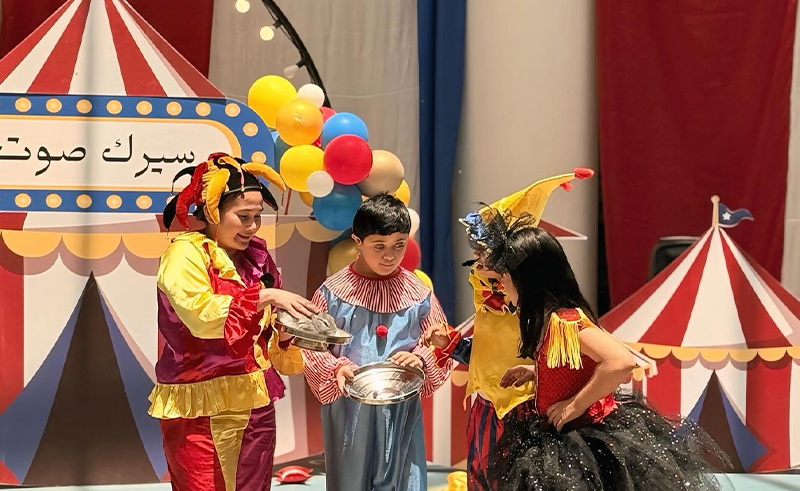
It started with four students and a question: What if we gave children with Down Syndrome more than care? What if we gave them a space built entirely around their pace, their voice, their way of seeing the world? That question turned into a school. The school turned into a movement. And today, Mohammed bin Naif bin Abdulaziz Schools for Down Syndrome, operating under the Saut Society in Saudi Arabia, stands as a symbol of what inclusion in education can feel like when the belief begins at the root.
Saut Society and Its Deeply Human Mission
Saut Society is the heart behind Mohammed bin Naif bin Abdulaziz Schools for Down Syndrome. It began in 1987 with a preschool and a vision that kept growing. In 2010, the school formally came under the sole management of the Saut Society, and the approach deepened. Today, the school offers an uninterrupted journey from birth to adulthood. Everything it does centers on giving students with Down Syndrome access to tools, skills, and spaces that reflect their full potential.
The goal isn’t to push students to fit into a system. It’s to shape a system that fits around them.
Tailored Learning Rooted in Real Life
Every student has a plan made just for them called, Individualized Education Plan. These plans shape lessons around how each child learns best. Some need more time, some thrive with visuals, and some speak more through action than words. No one is rushed. No one is left behind. Classrooms group students by age, not skill, because friendships grow better when they’re rooted in shared seasons of life. The school mirrors the outside world. Its pace, its mix, its rhythm.
Inside the classroom, lessons follow the best international research. But some of the most meaningful learning happens beyond it. In the supermarket aisle, where a student picks out ingredients for lunch, or in the kitchen, where they measure, mix, and taste.
These are the quiet moments that shape something bigger. A math lesson tucked into a recipe. A sense of confidence growing through a friendly exchange. A routine that turns into independence. Bit by bit, each task adds to a larger picture. A life where every child is seen, supported, and steadily stepping into their own voice.
Creating a Path That Continues After School
Vocational training sits at the heart of Saut’s approach. It begins in calm, guided spaces with students folding towels, following charts, and practicing greetings. Bit by bit, they learn how to show up, take responsibility, and feel ready in the world beyond the school walls.
Today, many graduates brew coffee behind café counters, assist in university offices, or help run the very school they once attended. Some are secretaries. Some lead gym classes. These aren’t gestures of inclusion. They’re real jobs, held by capable adults who were once students here, and who now give back with quiet pride.
Amplifying Voices, Not Speaking For Them
One of the school’s biggest strengths is its belief in self-representation. Students are encouraged to speak, share, and show up for themselves. They participate in public life and take part in government conversations. They meet artists, athletes, and cultural leaders. These children host visitors and even act as ambassadors.
Zaina Zaidan, CEO of Saut Society, puts it simply: “Our students are present. They’re heard. They’re contributing.” It’s a community that doesn’t just support inclusion but models what it looks like.
Garga’an and the Joy of Community-Led Support
Every year during Ramadan, the school courtyard comes alive. Tables go up. Kids arrive with boxes of cookies, stacks of crafts, things they’ve made or planned to sell. They’re called Little Merchants. Some of them have Down Syndrome. Some don’t. It doesn’t really matter. They stand together, learning how to greet a customer, how to count change, how to speak up.
Parents start asking about tables weeks in advance. Some even joke about getting the best spot before someone else does. There’s music, movement, and laughter that roll through the day. But what stays with you most is the way children learn to meet each other around shared work, shared moments. No lessons, no labels. Just the rhythm of a community doing something real, together.
Recognition That Reflects Real Change
The work at Saut hasn’t gone unnoticed. The school has received awards from UNESCO and the WHO’s Eastern Mediterranean Regional Office for its education and research efforts. More importantly, its methods have inspired conversations across Saudi Arabia about how schools can do more, not only for children with Down Syndrome, but for every student who feels unseen by the standard model.
A School Shaping a Wider Shift
Saut School in Riyadh isn’t a pilot project or an exception. It’s part of a growing wave of inclusive education in Saudi Arabia. Vision 2030 emphasizes full integration for students with disabilities. But where policies begin with structure, Saut begins with people. The school builds around real needs. It welcomes families early, sometimes right after birth. It keeps in touch even when there isn’t room for new enrollments.
Saut is not the only player in this field, but its model has helped pave the road for others. The aim is not just to expand services, but to expand possibilities.
When Success Looks Like Being Yourself
Students at Saut grow up learning they are capable. That they can work, speak, participate, and belong. Some become artists. Some become employees and some even become athletes. All grow with a deep sense that their voice matters.
This is what Mohammed bin Naif bin Abdulaziz Schools for Down Syndrome’s inclusion looks like when done right. It looks like self-expression. It looks like friendship. And it looks like parents who finally see their child through a different lens. And it looks like children who walk through school gates knowing they will be understood.
FAQs
What is Saut School Riyadh known for?
Saut School Riyadh is known for its unique model of inclusive education for children with Down Syndrome. It offers a full journey from early childhood through to adulthood, including vocational training and community participation.
How does Saut School support Down Syndrome inclusion in Saudi Arabia?
The school supports Down Syndrome inclusion by creating individualized learning plans, placing students in age-appropriate classes, and offering real-world experiences that build confidence and independence.
Are there vocational opportunities for Saut graduates?
Yes, many Saut graduates work in mainstream jobs, including in offices, coffee shops, and even at the school itself. These roles are supported through workplace coaching and job training.
What makes Saut School different from other Saudi Down Syndrome schools?
Saut School focuses on self-advocacy and community integration. It emphasizes participation, not just attendance, and is part of a broader effort toward Saudi school Down Syndrome inclusion.
Does Saut School Riyadh accept students from all over Saudi Arabia?
While based in Riyadh, Saut School receives interest from across the Kingdom. Due to capacity, not all students can be enrolled, but the Society remains in touch with families to offer support and guidance.
Follow us on Instagram for daily travel inspiration and untold stories from the Kingdom. Want more? Explore more experiences and stories in our Lifestyle and Wellness category.
This article is brought to you by Soul of Saudi — a Saudi travel blog dedicated to uncovering the heart and soul of the Kingdom.